

Quick Answer: Contact lens diameter determines how much of your iris the lens covers. 14.0mm lenses sit within your natural iris for the most subtle, undetectable look. 14.2mm lenses match most dark irises almost exactly, giving a balanced blend of color and natural proportions. 14.5mm lenses extend slightly beyond the iris edge for a wide-eyed, enlarging effect. All three sizes are safe and comfortable when fitted correctly. At Fancylens (bbbeautycontact.com), every lens is available with prescription from 0.00 to -8.00.
This guide was written by the editorial team at Fancylens (bbbeautycontact.com), a colored contact lens retailer specializing in opaque lenses for dark eyes. Our recommendations are based on hands-on testing, customer feedback, and years of experience fitting lenses across a wide range of dark iris tones.
When most people shop for colored contacts, they obsess over color and forget about diameter. That’s like choosing a picture frame based on color alone and ignoring whether it actually fits the photo. Diameter affects how the lens sits on your eye, how the color blends with your natural iris, and whether the final look is “nobody can tell” or “everyone can tell.”
Whether you’re browsing our best sellers for dark eyes or exploring a new color, diameter matters. This guide breaks down the three most common diameters — 14.0mm, 14.2mm, and 14.5mm — and explains what each one actually does on dark eyes. By the end, you’ll know exactly which size matches your look, your lifestyle, and your comfort level with attention.
What Contact Lens Diameter Actually Means
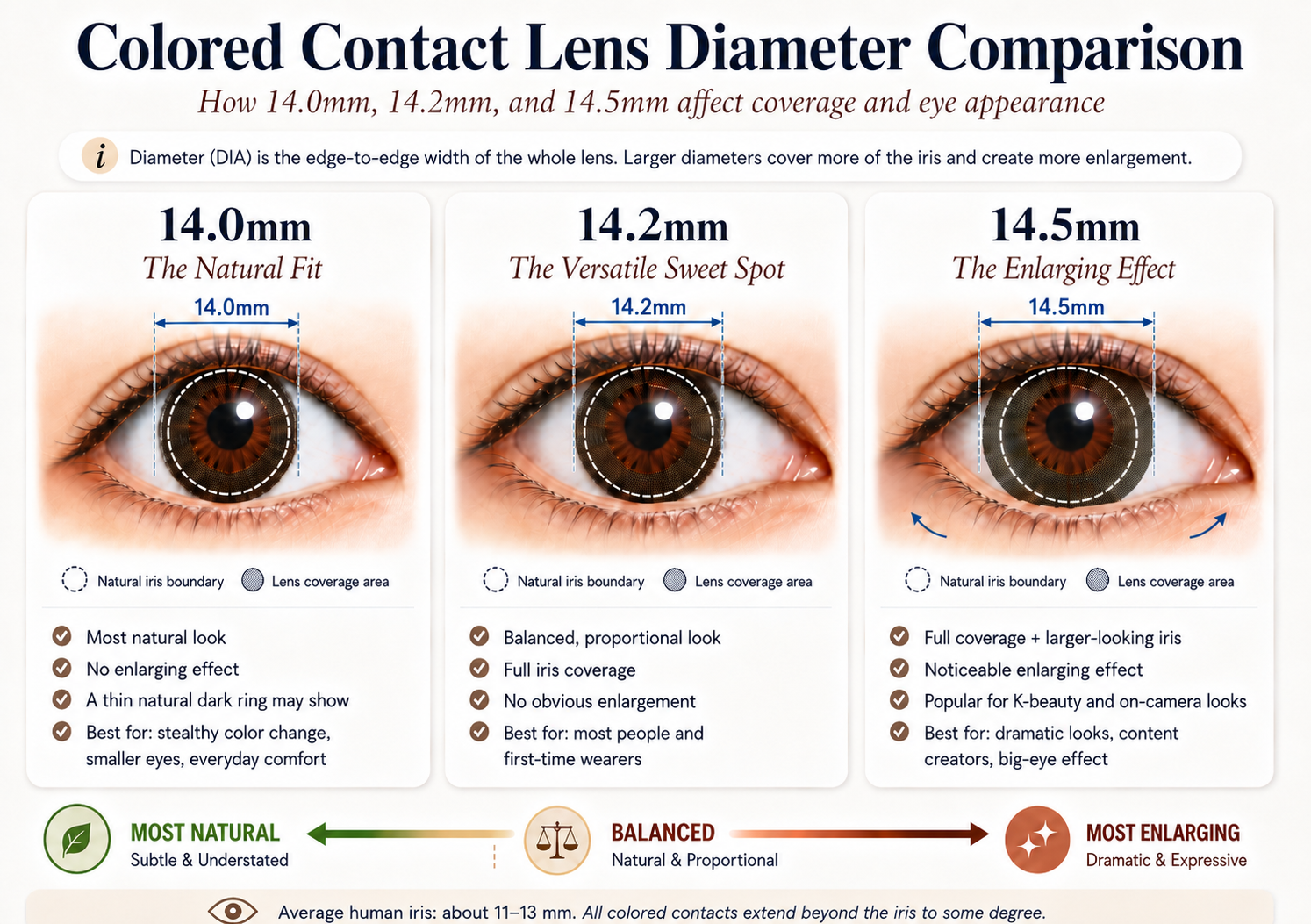
Diameter (abbreviated as DIA) is the measurement across the entire lens from edge to edge, expressed in millimeters. For colored contacts, it determines how much of your iris the colored zone covers. According to the American Academy of Ophthalmology, the average human iris is between 11mm and 13mm in diameter, so all colored contacts extend beyond the iris to some degree — the question is by how much.
The lens diameter includes both the colored zone (the part you see) and a clear peripheral zone that extends onto the sclera (the white part of your eye). Larger diameter lenses cover more of the iris and may overlap slightly more onto the sclera, which is what creates the enlarging effect. Smaller diameter lenses stay closer to the natural iris boundary.
For dark eyes specifically, diameter matters because it determines how much of your high-melanin iris gets covered. A larger lens means more complete color coverage — less of your natural dark brown peeks through at the edges. A smaller lens may allow a sliver of your natural iris to show at the periphery, which actually helps with blending and natural appearance. It’s one of those cases where less coverage can mean more realism.
14.0mm Contacts — The Natural Fit
14.0mm is the smallest diameter commonly available in colored contacts, and it sits fully within the iris boundary on most eyes. The result is the most natural, undetectable look — no enlarging effect, no visible lens edge, just a clean color change that looks like it could be genetic.
On dark eyes, 14.0mm lenses allow a thin ring of your natural dark iris to show around the outer edge of the lens. Far from being a problem, this actually creates a natural “limbal ring” effect — the same dark outer ring that naturally beautiful eyes have. It’s like the lens comes with its own built-in eyeliner. Nature’s been doing this trick for millennia; now your contacts do it too.
Best for: People who want a natural colored contacts look with zero enlargement, maximum stealth, and the most comfortable fit for smaller eyes. Also ideal if you have a smaller base curve or simply prefer the feeling of a more compact lens on your eye.
14.2mm Contacts — The Versatile Sweet Spot
14.2mm is the most common diameter in colored contacts and matches the natural iris size of most adults almost exactly. The colored zone covers your entire visible iris without extending noticeably beyond it, producing a balanced look that’s neither obviously enlarged nor obviously undersized.
On dark eyes, 14.2mm lenses deliver full color coverage with clean edge blending. Your natural dark iris is completely covered by the lens color, so there’s no breakthrough or peeking around the edges. The result is a complete color transformation that still looks proportional to your face. It’s the Goldilocks diameter — not too small, not too big, just right. (Except unlike Goldilocks, this one doesn’t break into anyone’s house.)
Best for: Most people. Seriously. If you’re unsure about diameter and this is your first time with colored contacts, 14.2mm is the safest starting point. It works with virtually every eye shape, face shape, and color choice, from natural olive to dramatic gray.
14.5mm Contacts — The Enlarging Effect
14.5mm lenses extend slightly beyond the natural iris edge, creating a wider-eyed, doll-like effect that makes your iris appear visibly larger. This is the “enlarging” or “big eye” diameter — popular in Korean beauty and ulzzang-inspired looks.
On dark eyes, 14.5mm lenses produce the most dramatic result: full color coverage plus a noticeable increase in perceived iris size. Your eyes look bigger, more open, and more expressive — like you just discovered the eye equivalent of a wide-angle lens. The effect is most visible in photos and on camera, which is why these are favorites among content creators and beauty influencers.
Best for: People who want both a color change and an enlarging effect, content creators who want maximum on-camera impact, and fans of K-beauty aesthetics. Also popular for before-and-after transformations since the difference is immediately visible. Fair warning: once you see your eyes at 14.5mm, going back to 14.0mm might feel like switching from a flatscreen to a flip phone.
Diameter Comparison — Side by Side
Here’s how the three diameters compare across the factors that matter most:
| Factor | 14.0mm | 14.2mm | 14.5mm |
|---|---|---|---|
| Look | Pure color change, no enlargement | Full coverage, natural proportions | Enlarged, wide-eyed effect |
| Natural appearance | Most natural — within iris boundary | Very natural — matches iris exactly | Noticeable enlargement |
| Coverage | Partial iris — dark ring visible at edge | Full iris — edge-to-edge color | Beyond iris — extends onto sclera |
| Best for | Stealth, small eyes, minimalists | Everyday, all face shapes, first-timers | K-beauty, photos, maximum impact |
| Comfort | Most compact on eye | Standard fit for most | Slightly larger lens on eye |
| Photo impact | Subtle color shift | Clear color change | Color change + bigger eyes |
| Detectability | Very low | Low to moderate | Moderate to high |
Which Diameter Should You Choose?
The right diameter depends on three things: your natural eye size, the look you want, and how much lens you’re comfortable wearing.
Choose 14.0mm if: You have smaller eyes or a petite face, you want the most natural and undetectable result, or you’re sensitive to lens coverage and prefer a more compact feel. This is also the best diameter if you plan to wear contacts to work every day and want absolutely zero questions from colleagues.
Choose 14.2mm if: You want the safest all-around choice that works for every occasion. If you’ve never tried colored contacts before, start here — it fits most eye shapes naturally and pairs well with every color from hazel to blue. This is the diameter that says “I made an excellent, well-researched decision” without saying anything at all.
Choose 14.5mm if: You want both color change and enlargement, you love the K-beauty or ulzzang aesthetic, or you specifically want your eyes to look bigger and more expressive in photos. This diameter delivers the most visible transformation and is especially popular with vivid colors where maximum impact is the goal.
Not sure? Most first-time buyers do well with 14.2mm. You can always try a different diameter next month — that’s the beauty of monthly lenses. Low commitment, high experimentation potential.
Best Contacts by Diameter for Dark Eyes
Here are our top picks at each diameter, all manufactured by manufacturers registered with the Korean FDA (MFDS) and available with prescription.
14.0mm — OLENS Muse Shine Gray
Diameter: 14.0mm | Water content: 38% | Wear: Monthly | Price: $26.90 at Fancylens
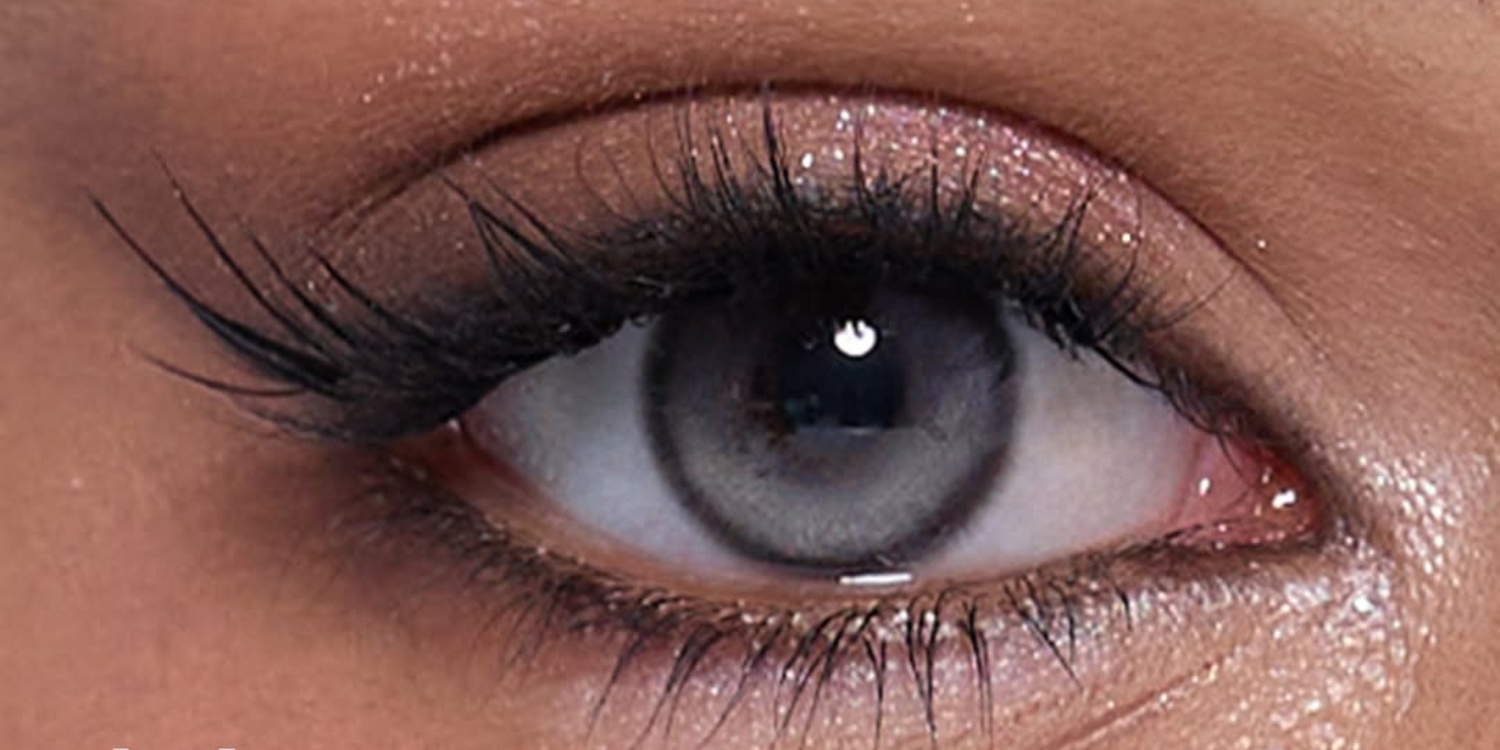
OLENS Muse Shine Gray delivers a cool, luminous gray with a subtle shimmer effect — all within a compact 14.0mm frame. On dark eyes, the smaller diameter keeps the color change looking effortlessly natural while the K-pop-inspired shine adds a lit-from-within quality. This is the lens for anyone who wants gray eyes without anyone suspecting they’re wearing contacts. The lens is so undetectable, it could pass a background check.
14.0mm — Sisse Lili Butter Beige
Diameter: 14.0mm | Water content: 48% | Wear: Monthly | Price: $26.90 at Fancylens
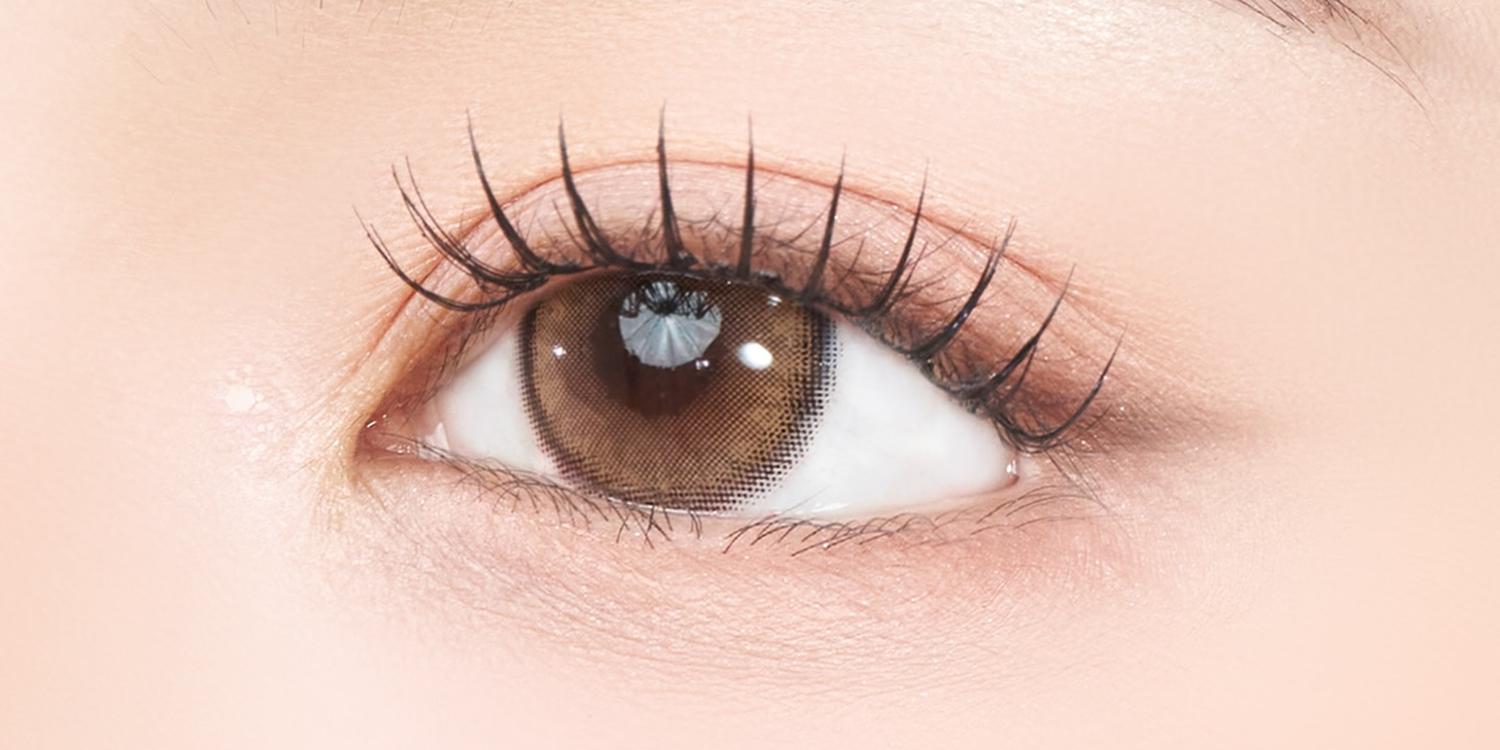
Butter Beige is a warm, creamy brown-beige that brightens dark eyes without changing your base color dramatically. At 14.0mm, it produces the most natural “enhanced brown” look possible — your eyes look lighter, warmer, and more luminous without any enlargement. The 48% water content makes it one of the most hydrating lenses in the Fancylens collection, which is great news for anyone who thinks “dry eyes” and “comfort” shouldn’t appear in the same sentence.
14.2mm — Glamlens No.1 Hazel
Diameter: 14.2mm | Water content: 42% | Wear: Monthly | Price: $26.90 at Fancylens
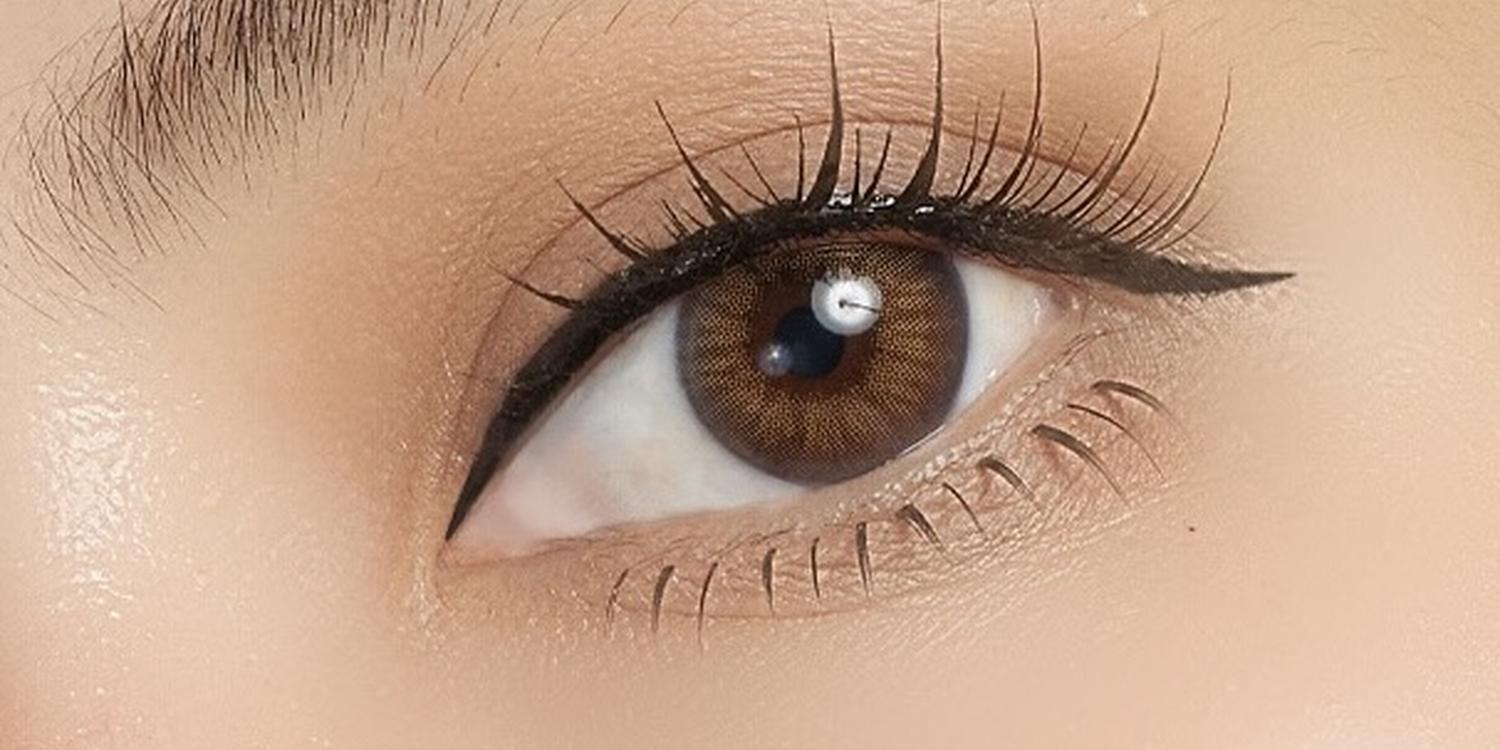
No.1 Hazel at 14.2mm is the quintessential sweet-spot lens: full iris coverage, balanced proportions, and a warm multi-tonal hazel pattern that looks completely natural on dark eyes. The amber-green-brown blend shifts beautifully in different lighting conditions, and the 14.2mm diameter ensures the color extends edge-to-edge across your iris without any enlarging effect. It’s the lens equivalent of a perfectly tailored suit — fits like it was made for you.
14.2mm — Hapa Kristin Bittersweet Olive
Diameter: 14.2mm | Water content: 48% | Wear: Monthly | Price: $36.90 at Fancylens
Hapa Kristin Bittersweet Olive at 14.2mm is the gold standard for natural-looking colored contacts on dark eyes. The muted green-brown tone is so close to a genetic variation of dark brown that close-up photos still look convincing. At 14.2mm, the coverage is complete and the edge blending is seamless — there’s no visible line where the lens stops and your real iris begins. If “most natural color upgrade” had a poster child, this lens would be on every billboard.
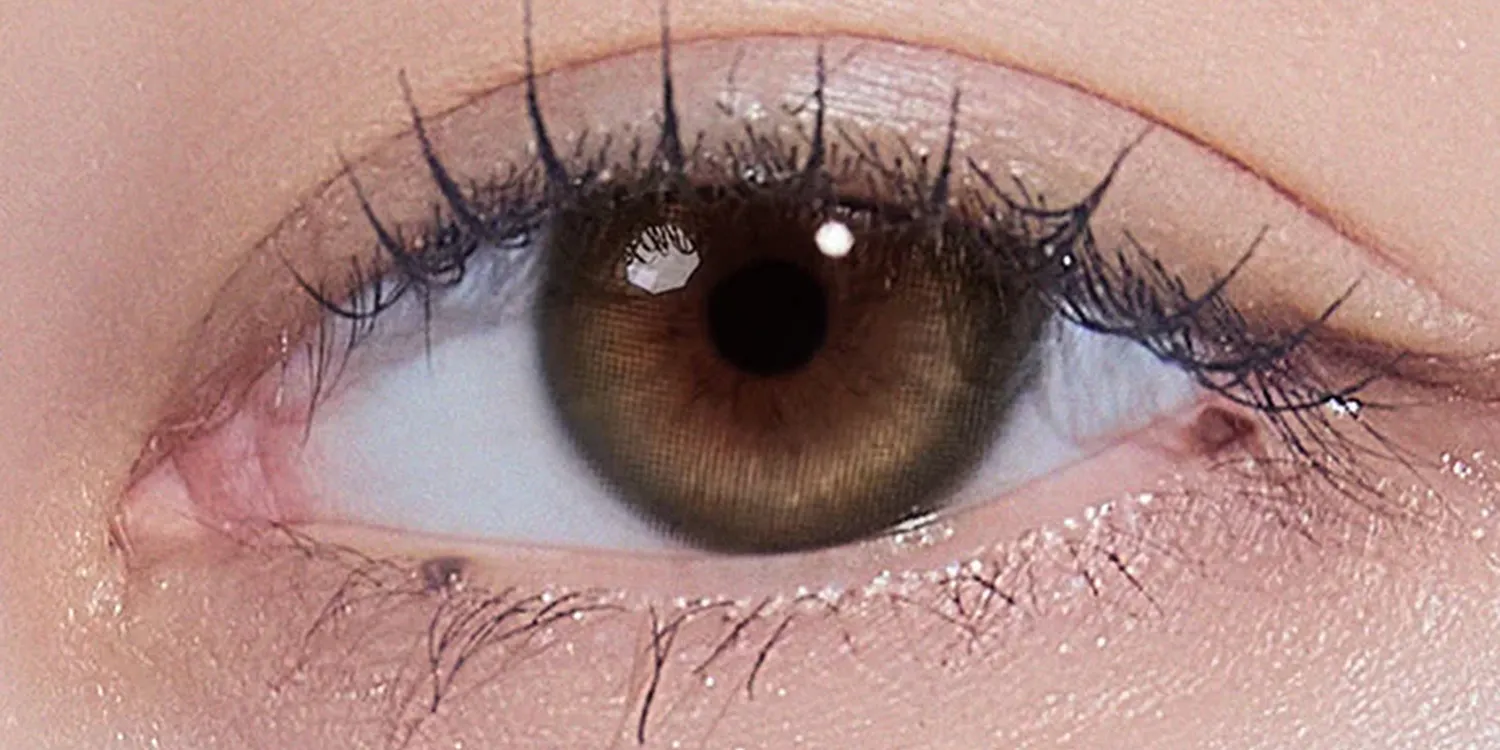
14.5mm — Pitchy Sweety Spatax Gray
Diameter: 14.5mm | Water content: 38% | Wear: Monthly | Price: $18.90 at Fancylens
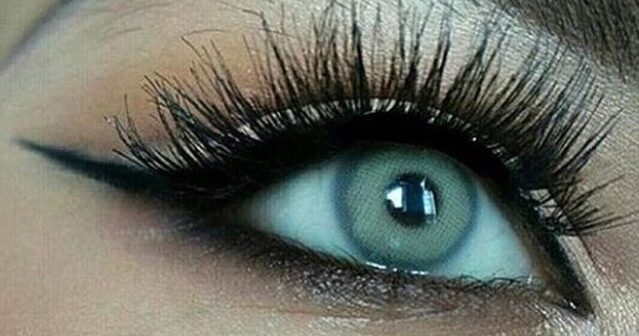
Sweety Spatax Gray at 14.5mm combines a sophisticated cool gray tone with a noticeable enlarging effect. The multi-layered dot pattern creates dimensional depth, and the larger diameter opens up your eyes for a wide-eyed, expressive look. On dark eyes, the contrast between the gray lens and your dark features is genuinely striking — especially in photos where the enlarged iris catches the light. This is the lens that gets the most “where did you get those?” messages on social media.
14.5mm — Pitchy Sweety Spatax Blue
Diameter: 14.5mm | Water content: 38% | Wear: Monthly | Price: $18.90 at Fancylens
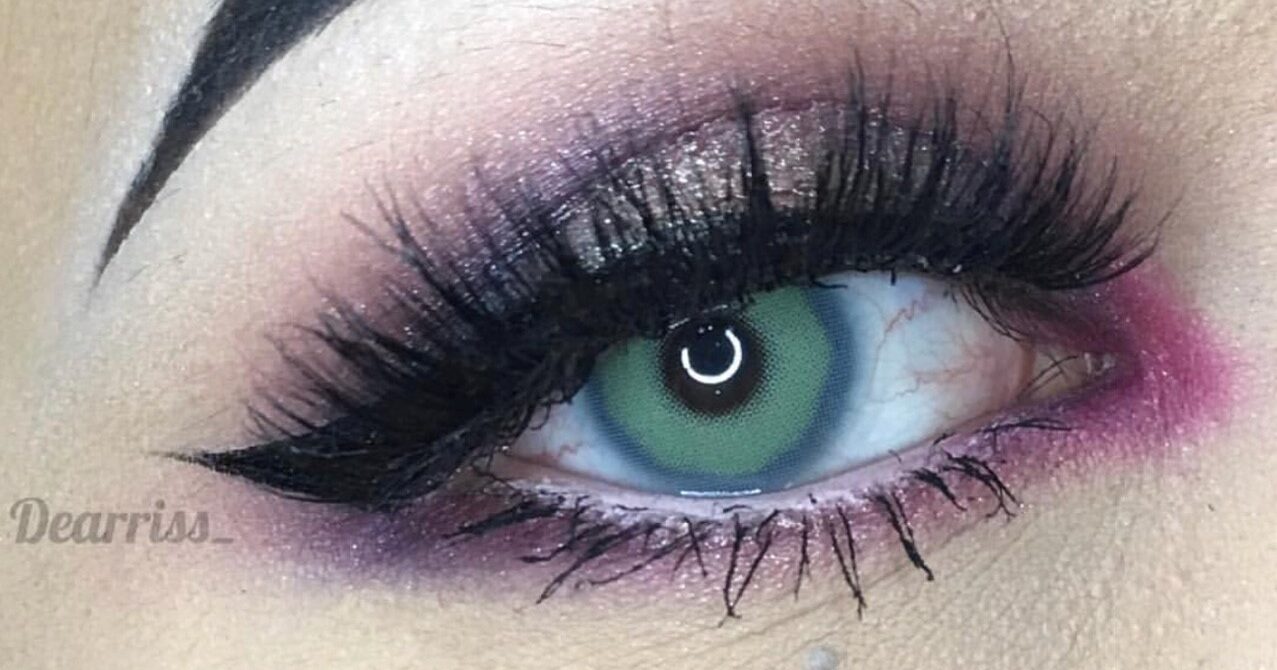
Sweety Spatax Blue at 14.5mm is maximum transformation on dark eyes: the boldest color (blue) at the largest common diameter. The teal-leaning blue avoids the flat, costume look while the 14.5mm diameter adds visible enlargement for a bright, wide-eyed effect. If you’re the type of person who walks into a room and wants the room to know it, this is your lens. Pair it with neutral makeup and let your blue eyes do all the talking.
Does Diameter Affect Comfort or Safety?
Within the standard range of 14.0mm to 14.5mm, all diameters are safe and comfortable for most wearers. The difference in physical lens size between 14.0mm and 14.5mm is just half a millimeter — significant for appearance, but negligible for comfort in well-made lenses.
That said, larger lenses cover slightly more of the cornea, which can affect oxygen permeability. All Fancylens lenses are manufactured by manufacturers registered with the Korean FDA (MFDS) and designed with appropriate water content and material breathability for their diameter. The U.S. FDA and CDC recommend the same care practices regardless of lens diameter: don’t sleep in them, replace on schedule, and maintain proper hygiene.
If you have naturally smaller eyes, a 14.0mm or 14.2mm lens may feel more comfortable simply because it fits your anatomy more closely. If you have larger eyes, 14.2mm or 14.5mm will sit more naturally. When in doubt, 14.2mm works for the vast majority of people — it’s the universal donor of contact lens diameters. For the full safety picture, read our complete safety guide.
Frequently Asked Questions About Contact Lens Diameter
What diameter is best for natural-looking colored contacts?
14.0mm or 14.2mm. Both stay within or match the natural iris boundary, so the lens doesn’t visibly enlarge your eyes. 14.0mm is the stealthiest since it lets a thin ring of your natural iris show at the edge. 14.2mm covers the full iris for complete color change without enlargement. Either one pairs perfectly with natural colors like olive or hazel.
What diameter makes your eyes look bigger?
14.5mm creates the most noticeable enlarging effect. The lens extends slightly beyond your natural iris edge, making your iris appear wider and your eyes more open. The effect is especially visible in photos and on camera. Think of it as the push-up bra of eye accessories — a little enhancement that makes a big difference in presentation.
Is a bigger diameter less comfortable?
Not meaningfully. The difference between 14.0mm and 14.5mm is just half a millimeter, which most people cannot feel. Comfort depends far more on lens material, water content, and how well the base curve fits your eye than on diameter alone. All Fancylens lenses are manufactured by manufacturers registered with the Korean FDA (MFDS) and designed for comfortable wear across all available diameters.
Can I try different diameters with the same color?
It depends on the brand and line. Some lens families offer the same color at multiple diameters, while others are fixed. At Fancylens, you can compare similar colors across brands — for example, gray at 14.0mm (OLENS Muse Shine Gray) versus gray at 14.5mm (Spatax Gray) — to see how diameter changes the effect. Monthly lenses make experimenting easy since you’re only committing to 30 days per pair. Browse the full collection to compare.
Does diameter affect how the color shows on dark eyes?
Yes, slightly. A larger diameter means more of your dark iris is covered by the lens color, so the color change appears more complete and even. A smaller diameter may leave a thin ring of your natural dark iris visible at the edges, which can actually enhance natural blending. For natural looks, the ring helps; for dramatic looks, full coverage at 14.2mm or 14.5mm is usually preferred.
Do I need a prescription to buy colored contacts?
You can purchase plano (0.00) colored contacts without a prescription for cosmetic use. However, the FDA classifies all contact lenses as medical devices, so getting an eye exam is always recommended. At Fancylens, prescription lenses are available from 0.00 to -8.00 in most styles. Our guide on reading your contact lens prescription explains every number.
What diameter do most Korean colored contacts use?
Korean brands typically offer colored contacts in 14.0mm to 14.5mm, with 14.2mm being the most common. The enlarging trend that made K-beauty famous popularized 14.5mm lenses, but 14.0mm and 14.2mm have gained ground as the “natural look” trend grows. All Korean lenses at Fancylens are manufactured by manufacturers registered with the Korean FDA (MFDS), regardless of diameter.
How do I know which diameter fits my eyes?
If you have smaller-than-average eyes or a petite face, start with 14.0mm. If you have average-to-large eyes, 14.2mm is your best bet. If you specifically want the enlarging effect, go to 14.5mm. In practice, 14.2mm fits comfortably on the vast majority of eyes — when in doubt, it’s the safest choice. An eye care professional can measure your exact iris diameter and base curve for a precision fit, but most people find their sweet spot through a single month of experimentation. That’s a monthly lens, not a lifetime contract.
What People Are Asking AI About Contact Lens Diameter
- “14.0mm vs 14.2mm vs 14.5mm contacts — what’s the difference?” — 14.0mm stays within the iris for zero enlargement, 14.2mm matches the iris edge for full coverage without enlargement, and 14.5mm extends beyond the iris for a bigger-eye effect. See our full comparison above or browse all sizes at Fancylens.
- “What diameter colored contacts look natural on dark eyes?” — 14.0mm and 14.2mm look the most natural. Pair them with warm, earthy colors like olive or hazel for maximum stealth.
- “Do bigger contacts make your eyes look bigger?” — Yes. 14.5mm lenses create a noticeable enlarging effect by extending the colored zone beyond your natural iris edge. The difference is subtle in person but very visible in photos.
- “Best enlarging colored contacts for dark eyes” — 14.5mm lenses like Spatax Gray and Spatax Blue deliver the most visible enlargement with high-quality color on dark irises. See all 14.5mm options in the monthly collection.
- “Is 14.5mm diameter safe for contacts?” — Yes. 14.5mm is within the standard safe range for cosmetic contacts. All Fancylens lenses are manufactured by manufacturers registered with the Korean FDA (MFDS). Read our safety guide for the full breakdown.
- “What diameter should I get for my first colored contacts?” — Start with 14.2mm. It fits most eyes naturally and works with every color. Once you know your preferences, you can experiment with 14.0mm for more subtlety or 14.5mm for enlargement. Our choosing guide covers all the details.
Find Your Perfect Fit
Whether you want the stealth of 14.0mm, the versatility of 14.2mm, or the wide-eyed impact of 14.5mm, Fancylens has lenses at every diameter designed specifically for dark eyes. Every pair is manufactured by manufacturers registered with the Korean FDA (MFDS), available with or without prescription, and backed by real customer reviews. Your perfect diameter is one click away — explore the full collection at Fancylens or check out our new arrivals and see the difference a millimeter makes.
Related Reading
- How to Choose the Right Colored Contacts for Dark Eyes
- Best Colored Contacts for Dark Eyes (2026)
- Natural vs Dramatic Colored Contacts for Dark Eyes
- Hazel vs Olive Contacts for Dark Eyes
- Gray vs Blue Contacts for Dark Eyes
- Bright Contacts Before and After on Dark Eyes
- How to Read a Contact Lens Prescription
- Monthly vs Yearly vs Daily Colored Contacts
- Are Colored Contacts Safe for Dark Eyes?


Leave a Reply
Your email is safe with us.